


After German reunification, the prison at Andreasstrasse served as a men’s prison for almost 12 years. However, the second floor of the Stasi prison was left unused during this period and was therefore largely still in the state it was left in the 1980s. Today, it is the largest exhibit at the memorial. In 2002, the prison closed forever.
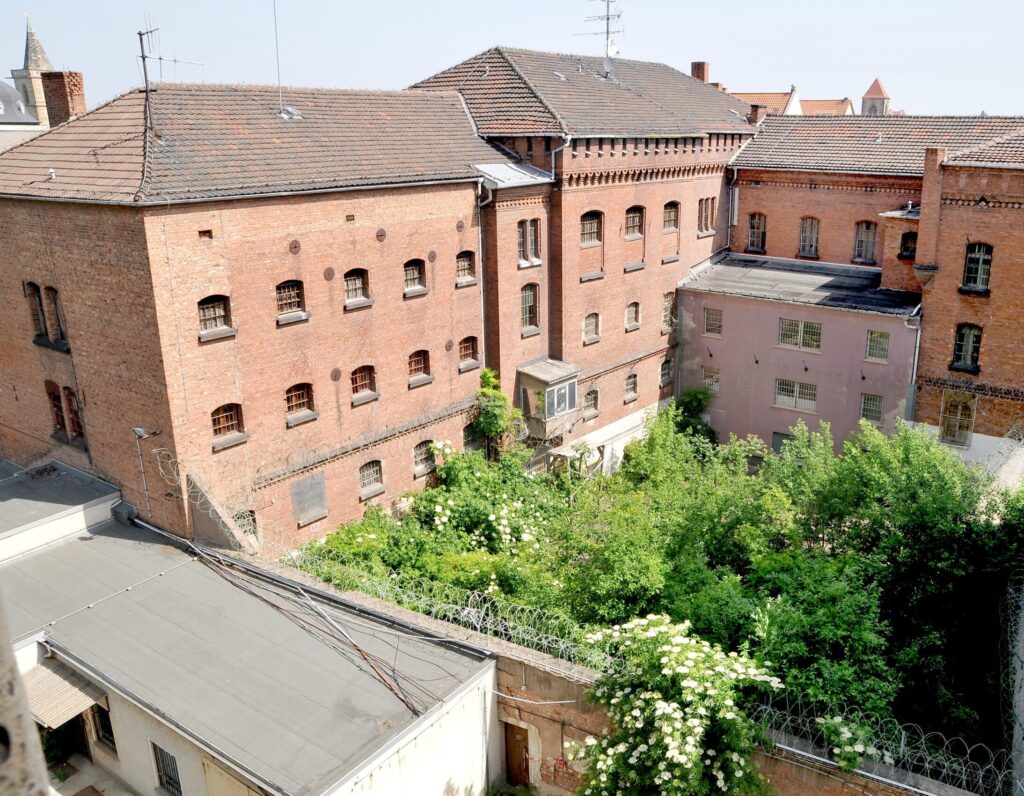

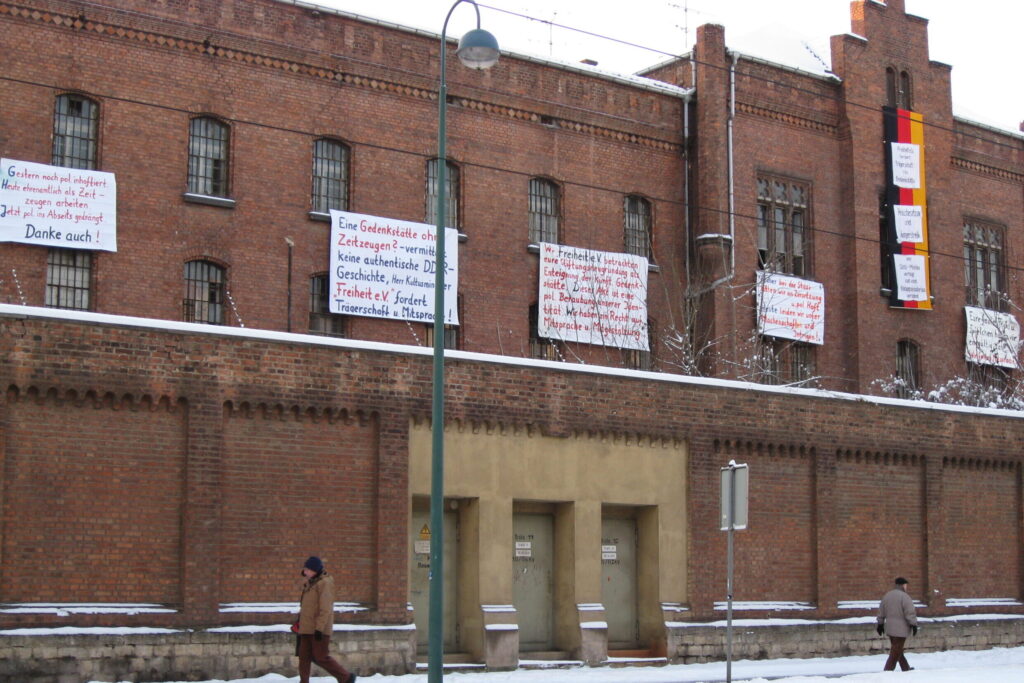
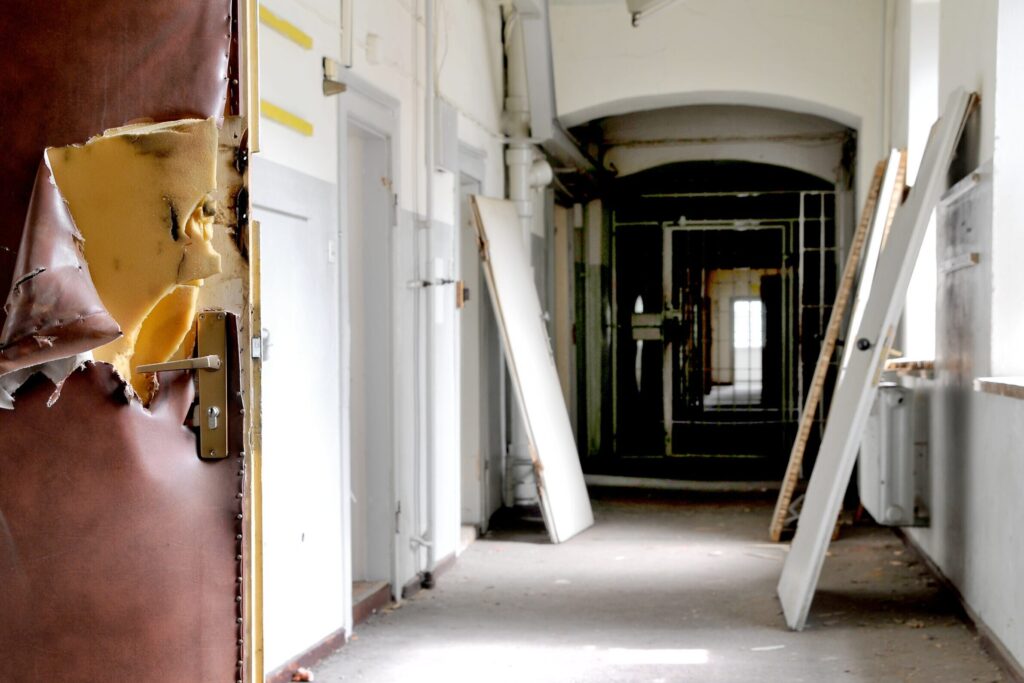
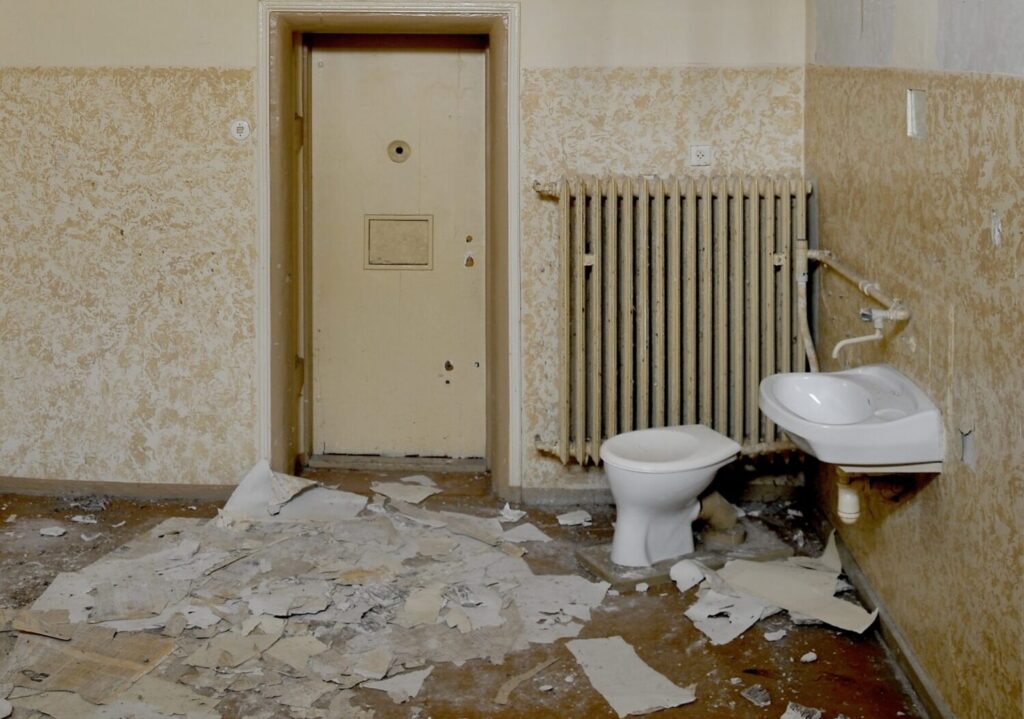
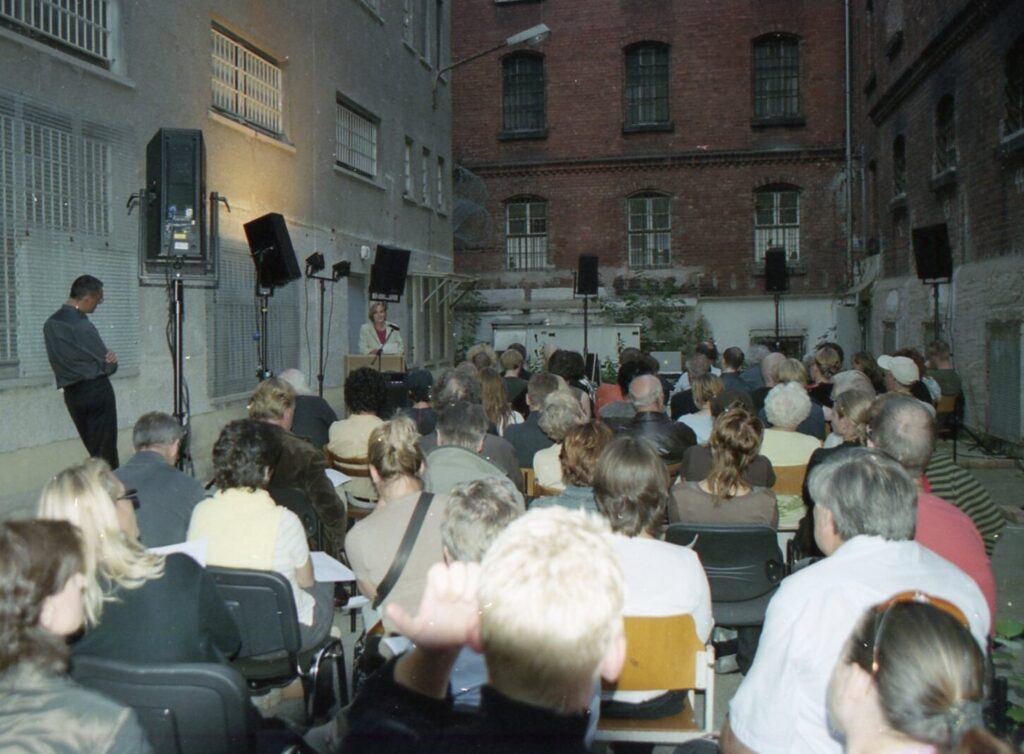
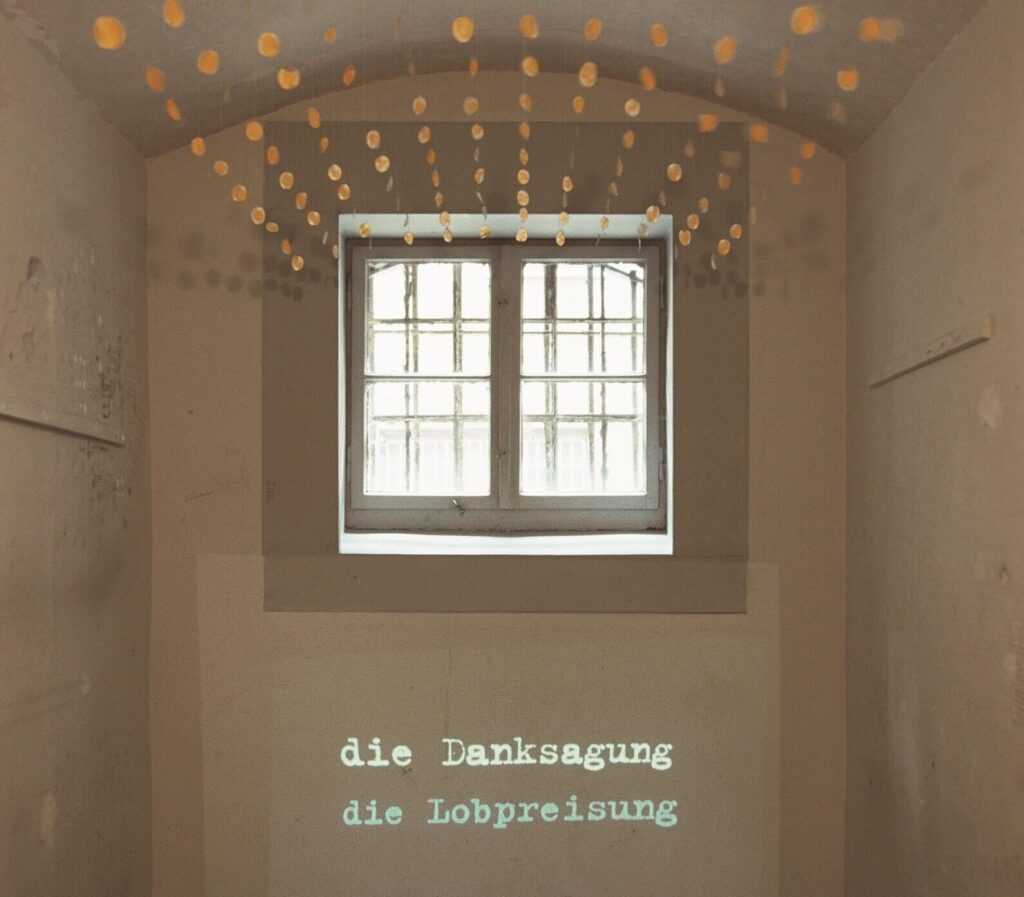
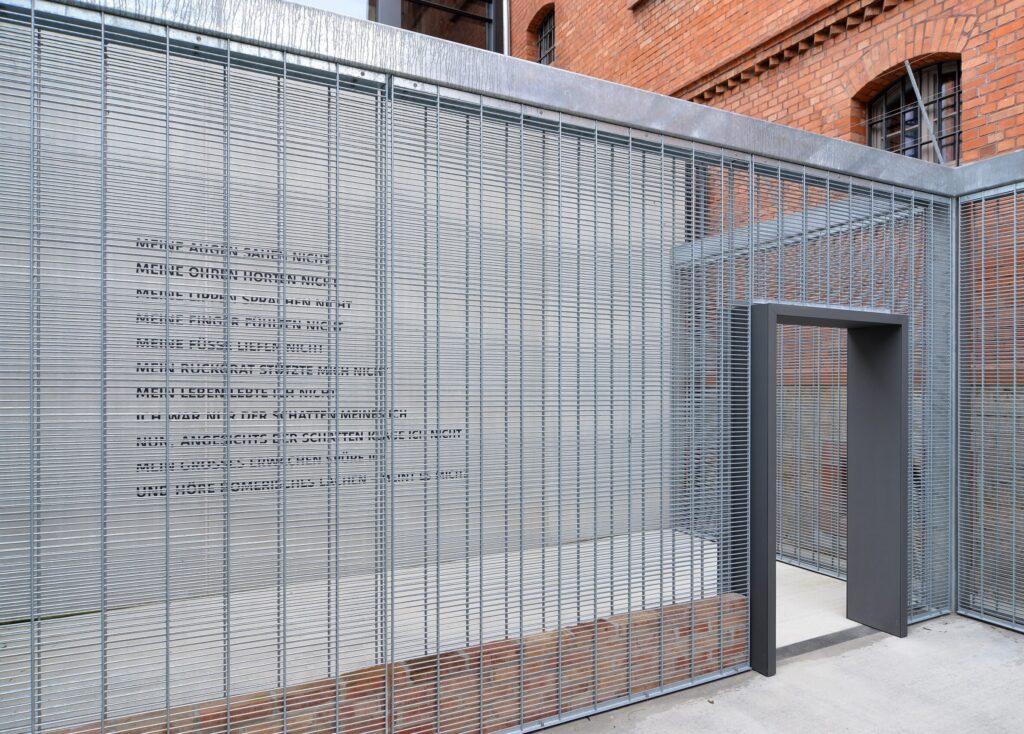
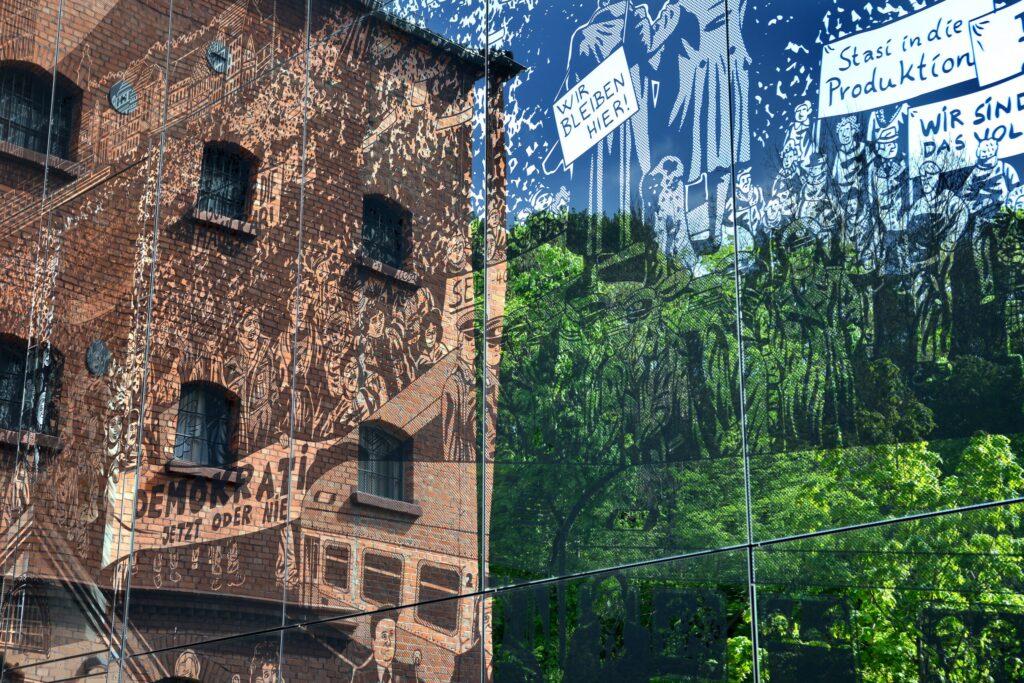
As the building began to fall into disrepair and rumors of its demolition spread, former participants in the Peaceful Revolution and former political prisoners campaigned for its preservation. Without the commitment of these eyewitnesses, the Andreasstrasse Memorial and Educational Centre would not exist today. They organised the first guided tours of the Andreasstrasse area and organised church services, concerts and three art exhibitions under the heading “Einschluss” (Admittance/ Locked-In). When it became clear that the building would not be demolished, but would become a place of remembrance, discussions were initiated on the design and content of such a place. In 2012, the Free State of Thuringia transferred the responsibility for the site to the Ettersberg Foundation. It began to develop a memorial and educational centre which opened its doors to the public on December 3, 2012.
You can find out more about the history of “Andreasstrasse” as well as the stories of eyewitnesses in our exhibitions at the Andreasstrasse Memorial and Educational Centre, as well as online and in some of our publications.
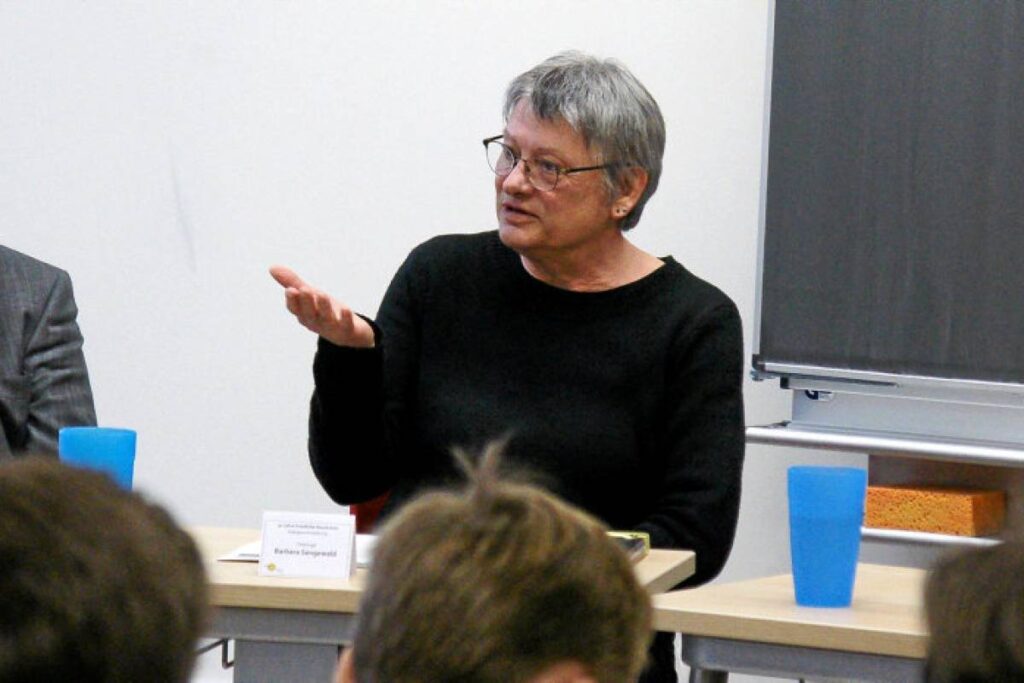
*1953 in Karl-Marx-Stadt, now Chemnitz
Dissident in the GDR and a participant in the 1989 Peaceful Revolution
“I see it as one of our great achievements that the revolution was peaceful and that we managed to make the Stasi files, or rather what was left of them, accessible. The files belong to the people — it’s their lives that are catalogued inside them. And without these files, researchers would not be able to work out the full extent of the SED dictatorship.”
Barbara Sengewald was not only active in the Peaceful Revolution, but also had a decisive influence on the transitional period before the first free municipal elections in Erfurt. After the reunification of Germany, she continued to stay engaged. Among other things, she was committed to ensuring that the former Stasi prison in Andreasstrasse in Erfurt was not razed to the ground, but became a place of remembrance and learning.

*1959 in Gotha
Accusation: ‘Incitement against the state’ according to §220 of the Criminal Code of the GDR
Detained in Andreasstrasse from June to December 1978
“In 2000, I set foot in the Stasi prison on Andreasstrasse for the first time again. First, I went alone. Then with my wife, then with my parents – and last but not least with my children. It took me 22 years to be able to talk to my children about my time in prison.”
After the reunification of Germany, Harald Ipolt, together with other eyewitnesses, remained committed to ensuring that the former Stasi prison in Andreasstrasse in Erfurt was not demolished, but became a place of remembrance and learning. During interviews with eyewitnesses in Andreasstrasse, he regularly discusses his life and his time in pre-trial detention.
